
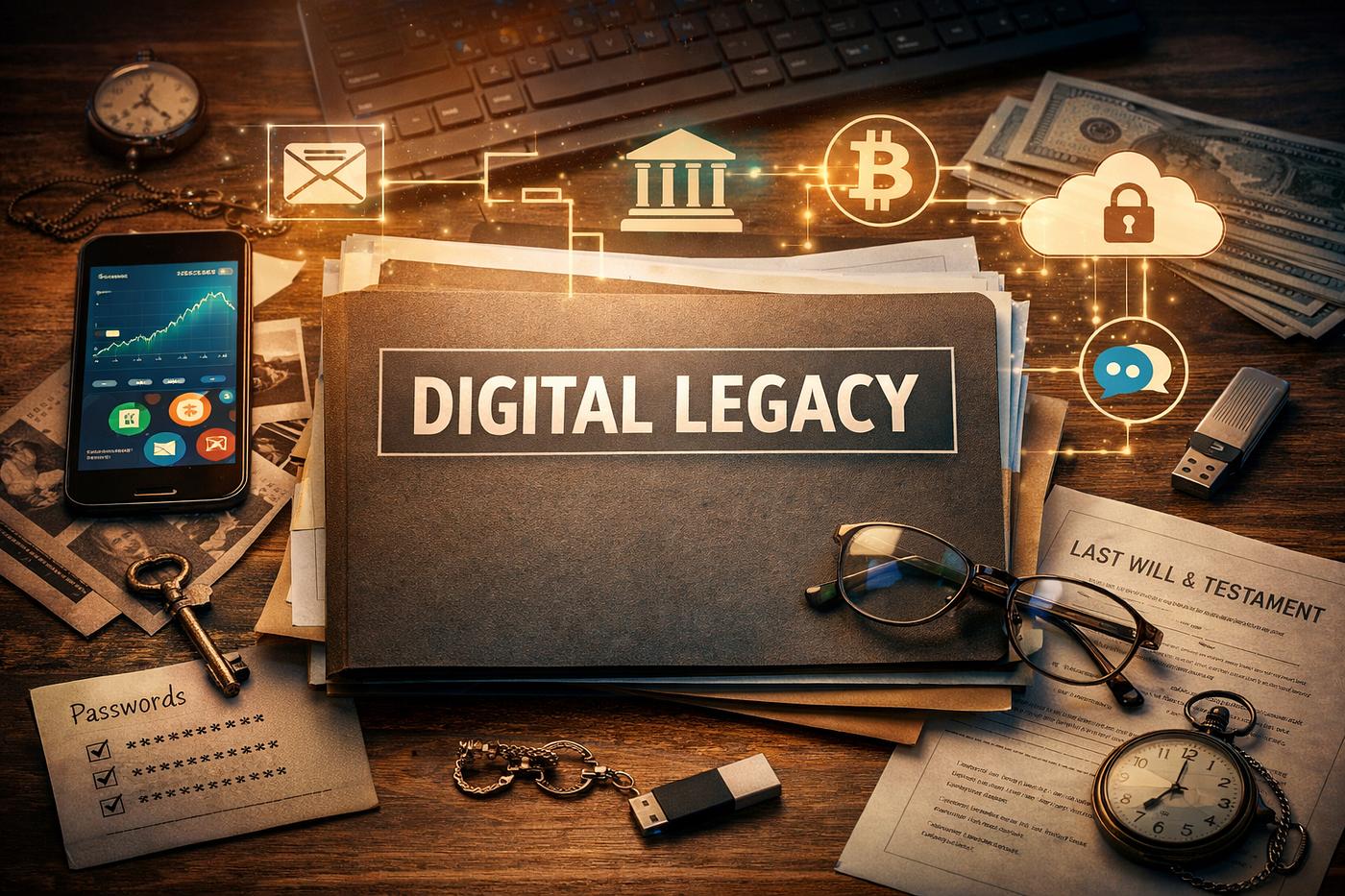
Digital Inheritance Planning: A Modern Guide to Protecting Your Legacy
Your legacy is no longer limited to property, bank accounts, and physical documents. Today, a significant part of what we own and create exists digitally. From financial accounts and digital assets to personal documents, credentials, photos, and important records, our digital lives can contain information that matters long after we are gone.
This makes digital inheritance planning an increasingly important part of modern estate planning.
What Is Digital Inheritance Planning?
Digital inheritance planning is the process of identifying your important digital assets and deciding how they should be protected, managed, and transferred to trusted beneficiaries if you can no longer access them.
A digital inheritance plan may include:
-
Digital assets and cryptocurrency
-
Financial and investment information
-
Important documents
-
Account credentials
-
Recovery information
-
Business-related digital assets
-
Personal records and files
-
Instructions for beneficiaries
The goal is to make sure important information does not become permanently inaccessible.
Why Is Digital Inheritance Important?
Traditional estate planning does not always address the complexity of digital assets.
A person may have dozens of online accounts, multiple digital wallets, cloud storage services, important documents, and other digital information. Without a clear plan, family members may not even know these assets exist.
Even when they know about them, accessing or transferring them can be difficult because of passwords, security controls, account policies, and encryption.
A digital inheritance plan provides a structured way to address these challenges before they become a problem.
Create a Digital Asset Inventory
The first step is understanding what you actually own.
Create an inventory of your important digital assets and categorize them based on their purpose and sensitivity.
For example:
Financial: bank accounts, investments, cryptocurrency, payment platforms.
Personal: photographs, private documents, email accounts, cloud storage.
Professional: business accounts, intellectual property, company documents.
Security: passwords, recovery codes, authentication information, private keys.
Not every account needs to be transferred to a beneficiary, so clearly defining what should happen to each category is important.
Choose Your Beneficiaries Carefully
Digital inheritance involves more than simply choosing someone you trust.
You should consider which beneficiary should receive access to specific types of information and whether different assets should have different beneficiaries.
For highly sensitive information, access should also be controlled through appropriate verification and authorization mechanisms.
A well-designed inheritance plan should protect the owner's privacy while ensuring that legitimate beneficiaries can eventually receive the information intended for them.
Security During Your Lifetime Still Matters
A digital inheritance plan should not make your information less secure while you are alive.
Simply writing all your passwords and instructions in an unprotected document creates a significant security risk.
Sensitive information should be protected using strong encryption, secure authentication, and carefully controlled access.
The objective is to create a system that provides security now and controlled access later.
What Happens If You Become Inactive?
One of the challenges of digital inheritance is determining when an inheritance process should actually begin.
A properly designed system can use predefined inactivity or verification mechanisms to help identify prolonged periods without activity.
However, these mechanisms should be carefully designed to reduce the possibility of accidental activation.
Verification periods, notifications, grace periods, and beneficiary confirmation can all play a role in creating a safer inheritance workflow.
How Vaultix Supports Digital Inheritance
Vaultix is designed to help users securely organize and protect sensitive digital information while planning for controlled beneficiary access.
By combining encrypted storage, access controls, beneficiary management, and inheritance mechanisms, Vaultix provides a structured approach to managing a digital legacy.
Instead of leaving important information scattered across devices, cloud accounts, and documents, users can organize the information that matters and define how it should be handled in the future.
Final Thoughts
Digital inheritance is becoming an essential part of protecting modern wealth and personal information.
The key is to plan before access becomes impossible. Identify your digital assets, organize important information, choose appropriate beneficiaries, and protect everything with strong security measures.
Your digital legacy deserves the same level of planning as your physical assets.
Plan your digital legacy today so the people you trust can access what matters tomorrow.






Secure Your Digital Legacy Today
Begin protecting your assets with institutional-grade security. Setup takes minutes, protection lasts generations.